So, We're Getting Ready to Do a Thing
So, the next hurdle that needs to be dealt with is a file conversion software that can convert the now JPEG image to a VP3, the file format needed for her machine.
I can’t remember when I last checked the “Store” page on the website; I’ve been so busy lately. During this time, however, my wife Barbara, who is an avid quilter, bought a new sewing and embroidery machine. Like me, she has her favorite devices that work for her—Viking by Husqvarna. She owns the Brilliance model, which she uses mainly for quilting, and her newest machine is called an Epic 2, which does embroidery.


How does this fit into what I am doing? Glad you asked. My logo, which appears on the landing page of this website, is a cartoon character I created in the late 80s while attending Columbia College. I incorporated this into what is now my featured logo. Sid, as he was known at the time of creation, will now appear on selected apparel. And instead of outsourcing all of our needs to various places, we decided to do everything in-house per my wife Barbara’s suggestion.

The next hurdle to address is finding file conversion software that can turn the current JPEG image into a VP3, which is the file format needed for her machine. I have been looking at a couple of options: Filestar and Wilcom. Hopefully, a decision can be made soon so we can move on to the next step, wholesale distributors. If anyone reading this month’s blog has suggestions for embroidery file conversion software, feel free to contact us by submitting your email through our contact page.

Revisited: My Marshall JCM 2000 DSL100-
Surprisingly the main board showed no signs of scorching or burns, being an amp of 25 years old, and being pre-2005, the year the bias drift issue was resolved. The board was clean. Keith went on to assure me that not all the PCB boards were faulty, that some boards never had a bias drift issue. Marshall UK reaffirmed this via email to me when I was seeking info on the faulty boards, and what lots in the production line were good and bad, they too assured me not all boards were bad, and it was possible I had a good one.

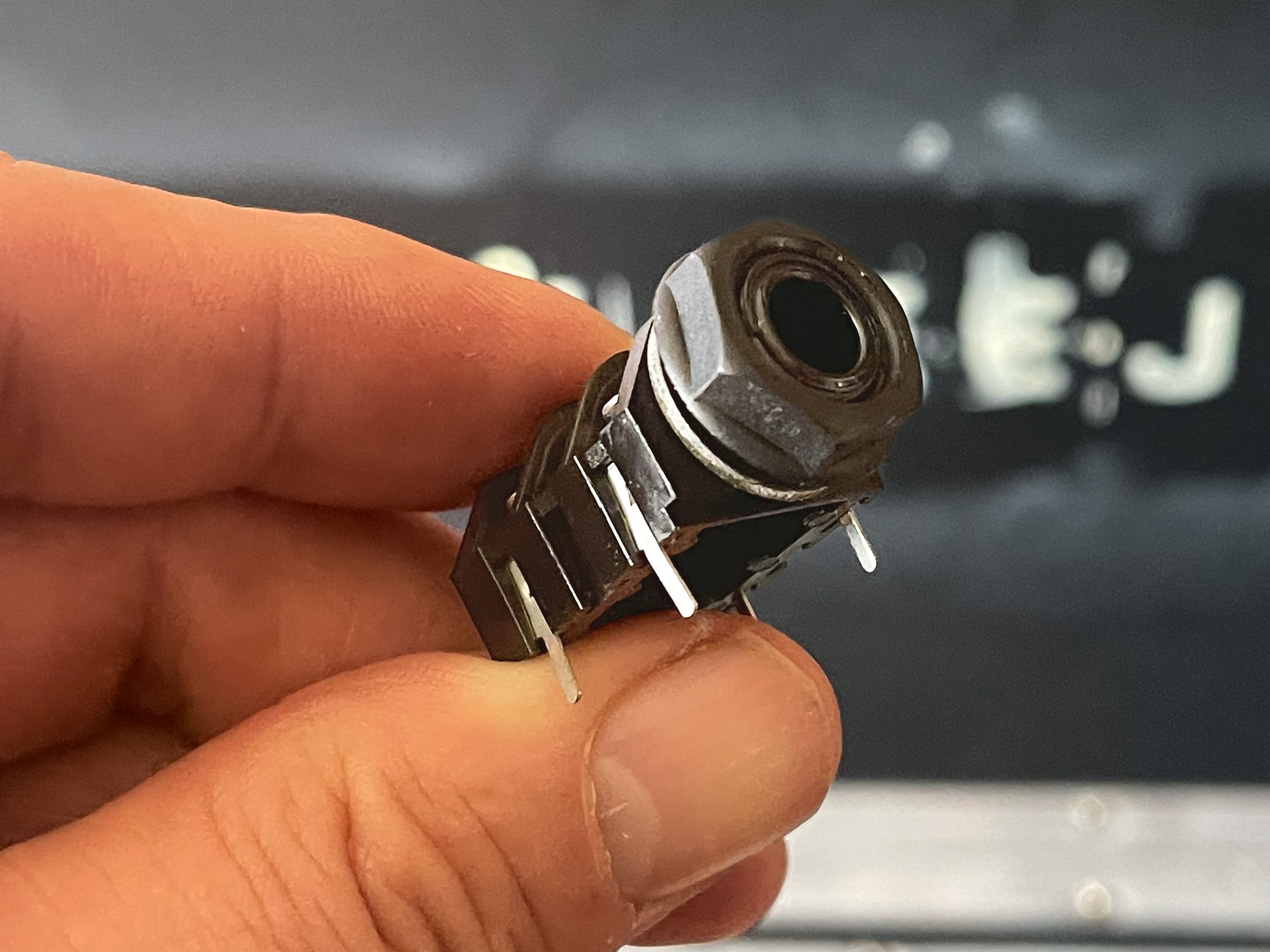
I finally managed to get my amp to Keith Fain, a retired electronics tech from Beckley, West Virginia, to repair the 8-ohm input jack, clean out the chassis for dust, and test the main board for the notorious bias drift these model amps were known to have from time to time. Since I wasn’t in any hurry to get it back, I left it in Keith’s capable hands on March 16th and awaited news that the work was complete. I received my first update from Keith around April 8th when he sent me an email with an image of the main board. Shortly after, we spoke by phone about his initial thoughts on the main board. Surprisingly, the main board showed no signs of scorching or burns. Being an amp of 25 years old and manufactured before 2005, when the bias drift issue was resolved, the board was clean. Keith assured me that not all PCB boards were faulty—some never had a bias drift issue. Marshall UK confirmed this via email when I inquired about defective boards, explaining that some lots in the production line were good and others bad, and that I might have a good one. Keith did, however, change the rear input jack after discovering the old one was still inside the chassis. It looked like three of the four connectors were missing, with the last one folded underneath (see photo below); so my guess is the input connector was just rattling around. Once the initial work was completed and Keith began testing the amp, he discovered a loud hum when powering it on. The hum was evident even when plugging a cable into the front jack. It didn’t take long to find the culprit: a C-46 capacitor. Keith replaced it with one of slightly higher voltage, which eliminated the hum, then set the bias, and it was rock solid. This capacitor was the only component on the main board that showed signs of burning (see photo below). He also repaired the solder joints on the impedance selector switch, which had been causing the amp to cut out during vibration. I finally brought it home on April 28th. I’m thankful Keith was so thorough and kept me informed throughout the process. He could have just done what I asked—clean the chassis and replace the input jack—and I would have discovered the hum only later, without knowing what caused it. I cleaned the tolex with some leather cleaner and replaced the broken handle. My Marshall JCM 2000 DSL100 now has a new lease on life. The next blog will probably be a sound demo. Until then, I’ll post some important links below. You can contact Keith Fain through his Facebook page.
And since I was not in any hurry to get it back, I left it in the capable hands of Keith on March 16th and awaited word that the work was complete. I got my first update from Keith around April 8th. He sent me an email with an image of the main board. Shortly thereafter, we spoke by phone about his initial thoughts on the main board.
Surprisingly, the main board showed no signs of scorching or burns, being an amp of 25 years old, and being pre-2005, the year the bias drift issue was resolved. The board was clean. Keith went on to assure me that not all the PCB boards were faulty, that some boards never had a bias drift issue. Marshall UK reaffirmed this via email to me when I was seeking info on the defective boards, and what lots in the production line were good and bad. They too assured me not all boards were bad, and I might have had a good one. Keith did, however, change the rear input jack, and found the old one still inside the chassis. By the looks of it, 3 of the 4 connectors were missing, while the last one was folded underneath (see photo below). So, my take is the input connector was rattling around.
Once the initial work was completed and Keith was set to test the amp, this was when he discovered a humming (loud) when he powered it up, the hum was even apparent when he plugged a cable into the front jack. It didn’t take long for him to find the Culprit. It was a C-46 capacitator. Keith replaced it with a slightly higher voltage, which eliminated the hum. He then set the bias, and it was rock solid. This capacitor was the only piece on the main board that Keith had found that showed some burns. (see photo below.) He also repaired the solder joints on the impedance selector switch that was causing the amp to cut out with vibration.
I finally brought it home on April 28th. I am thankful Keith was so detailed and kept me in the loop throughout the whole process. He could have done what I requested, which was to clean the chassis and change the input jack, and I would have discovered the hum, not knowing what it was or what was causing it.
I cleaned the tolex with some leather cleaner and replaced the broken handle. My Marshall JCM 2000 DSL100 has a new lease on life.
The following blog will likely be a playthrough. Till next time, I’ll post some important links below. You can contact Keith Farin via his Facebook page below.




Good News....Bad News and Possibly More Bad News: My Marshall JCM2000 DSL100
Since this was a used piece of gear, and according to the listing on the guitar Center website, it was listed as “Excellent.
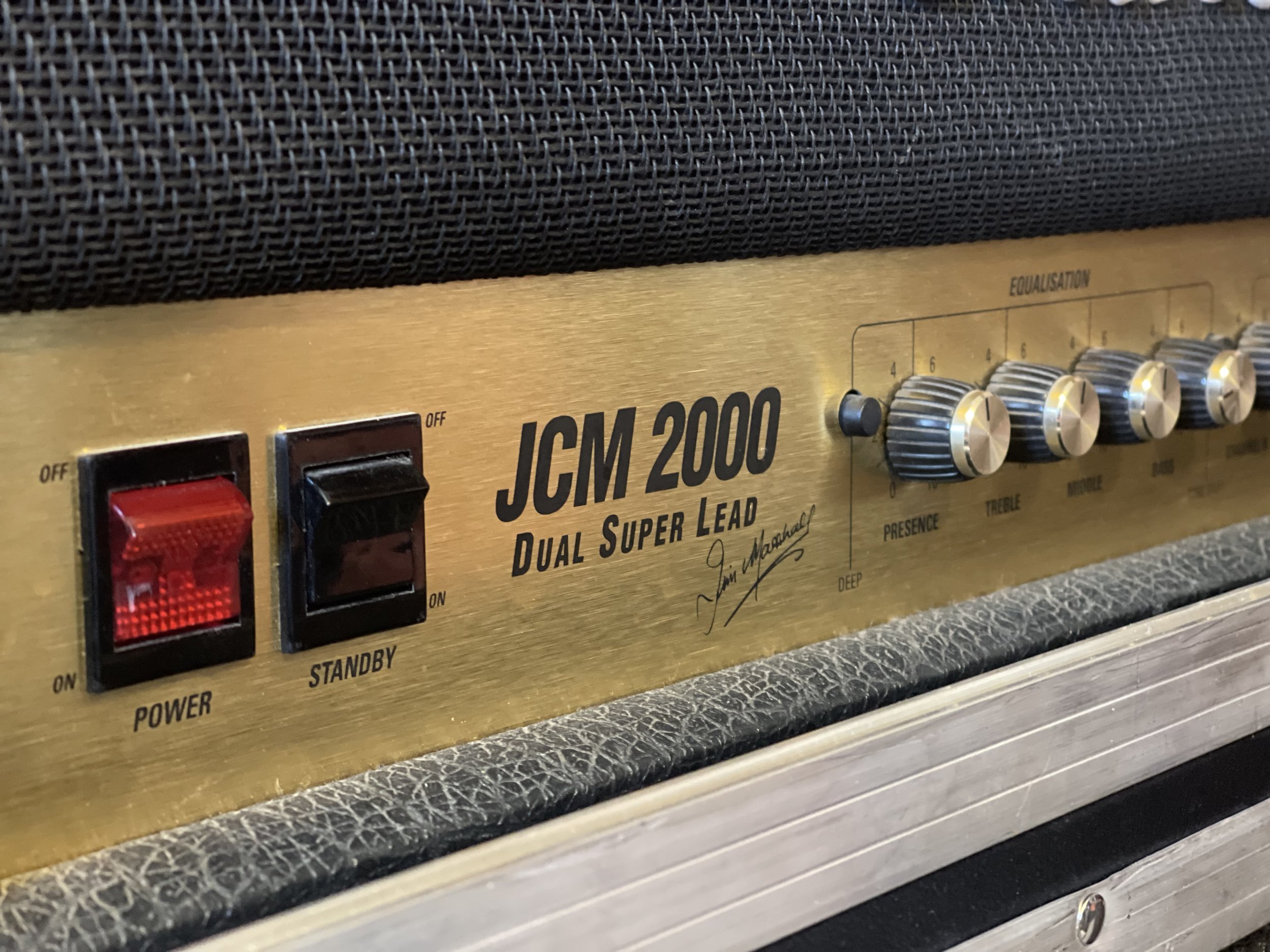
First, here’s the good news: my wonderful wife got me an amp head for Christmas. Our way of celebrating the holiday is to pick up to three things we’d like to receive, and then on the big day, we exchange gifts. This way, there’s some element of surprise during the festivities.
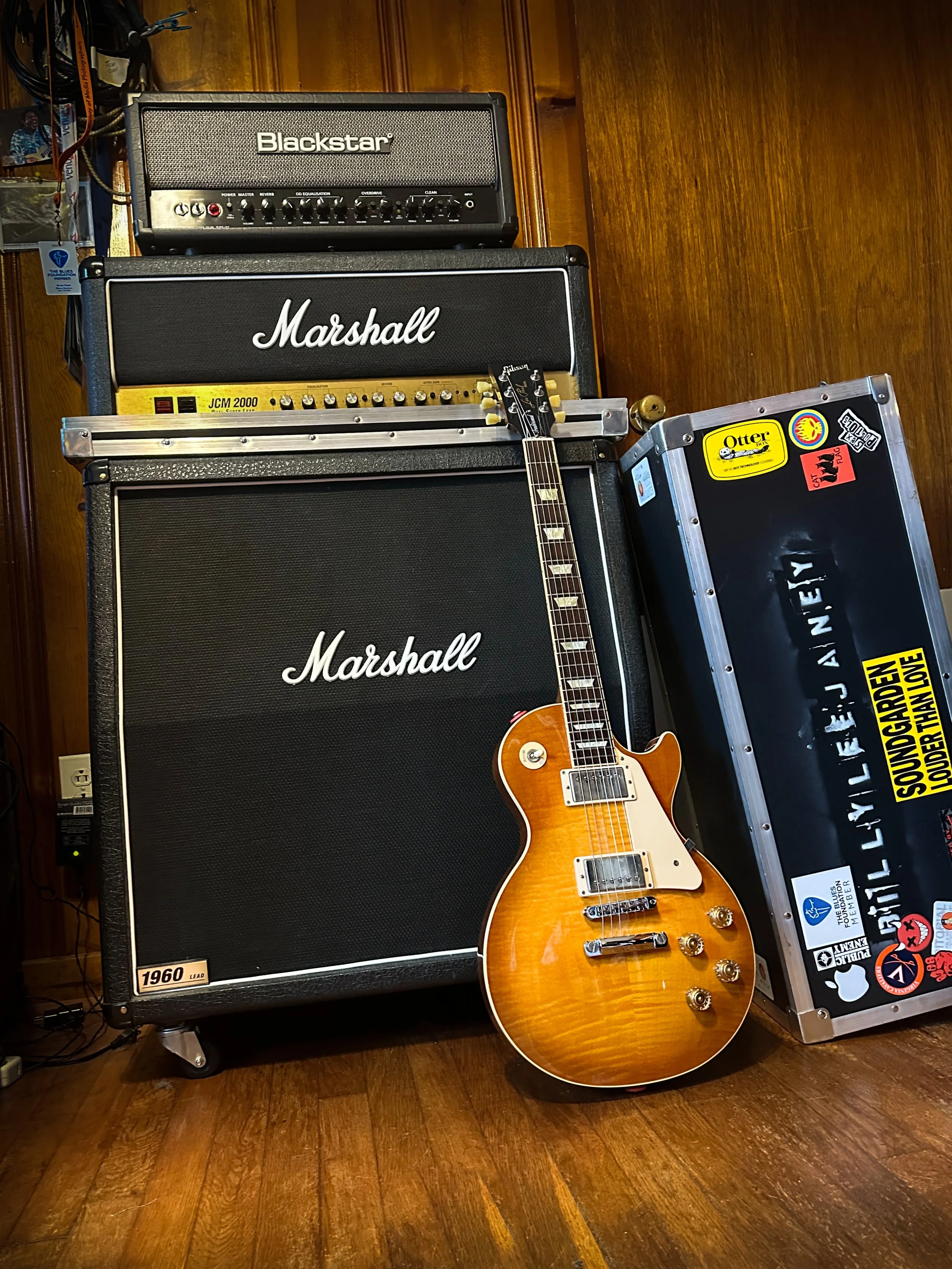
So, I selected my three, knowing very well that the odds of actually receiving one of them were slim to none (grin). Come the big day, and there it was — that one gift I thought might be a bit out of reach. It was a Marshall JCM 2000 100-watt amp, which she got at a pretty good deal from Guitar Center (online), Grand Rapids, Iowa. It even came with an ATA flight case. I was speechless, to say the least. This was going to be a perfect match with my Marshall 1960A cabinet.
Since this was a used piece of gear, and according to the listing on the Guitar Center website, it was marked as “Excellent,” the first thing I noticed was a name stenciled on the flight case: Billy Lee Janey. I paused my inspection to Google his name and search social media just to see who he is. I found out Billy Lee Janey is a very accomplished and established touring blues musician from Grand Rapids, Iowa. I spent about an hour watching some videos on YouTube, reading his bio, and checking online reviews. I’ll include his links below.
So I selected my 3, knowing very well the odds of receiving one of the gifts were slim to none (grin). Come the big day, and there it was, that one gift I thought would be a bit out of reach. There it was, a Marshall JCM 2000 100-watt amp. She got a pretty good deal from Guitar Center (online), Grand Rapids, Iowa; it came with an ATA flight case too. I was speechless to say the least. This was going to be a great pairing with my Marshall 1960A cabinet.
Since this was a used piece of gear, and according to the listing on the guitar Center website, it was listed as “Excellent”, First off there was a name stenciled on the flight case was Billy Lee Janey, of course I took a time out from my inspection and had to google his name and search social media to see who he is, found out Billy Lee Janey is a very accomplished and established touring blues musician from Grand Rapids, Iowa. I took the better part of an hour to watch some videos on YouTube and to read his bio and online reviews. I’ll throw his links down below.
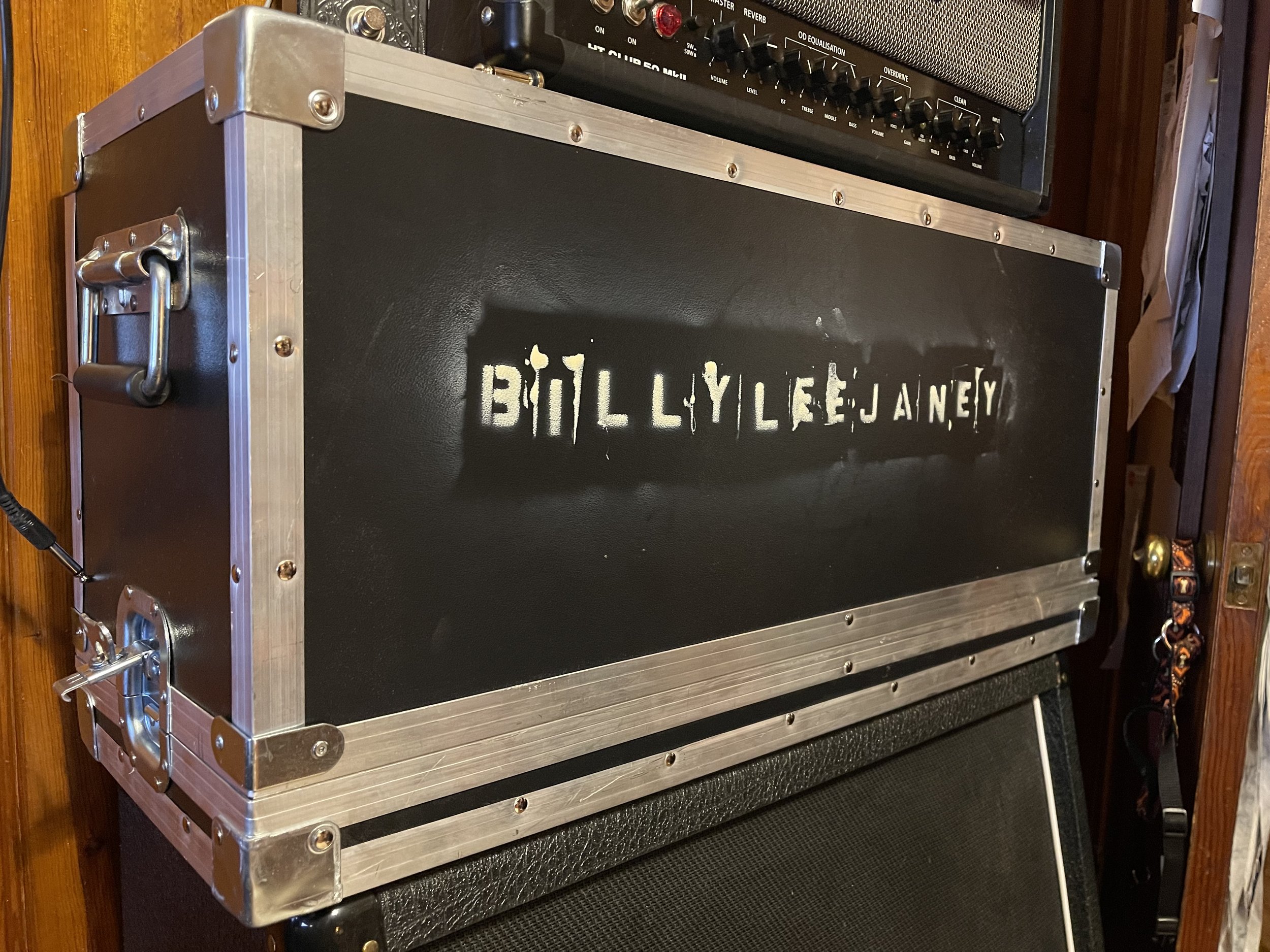
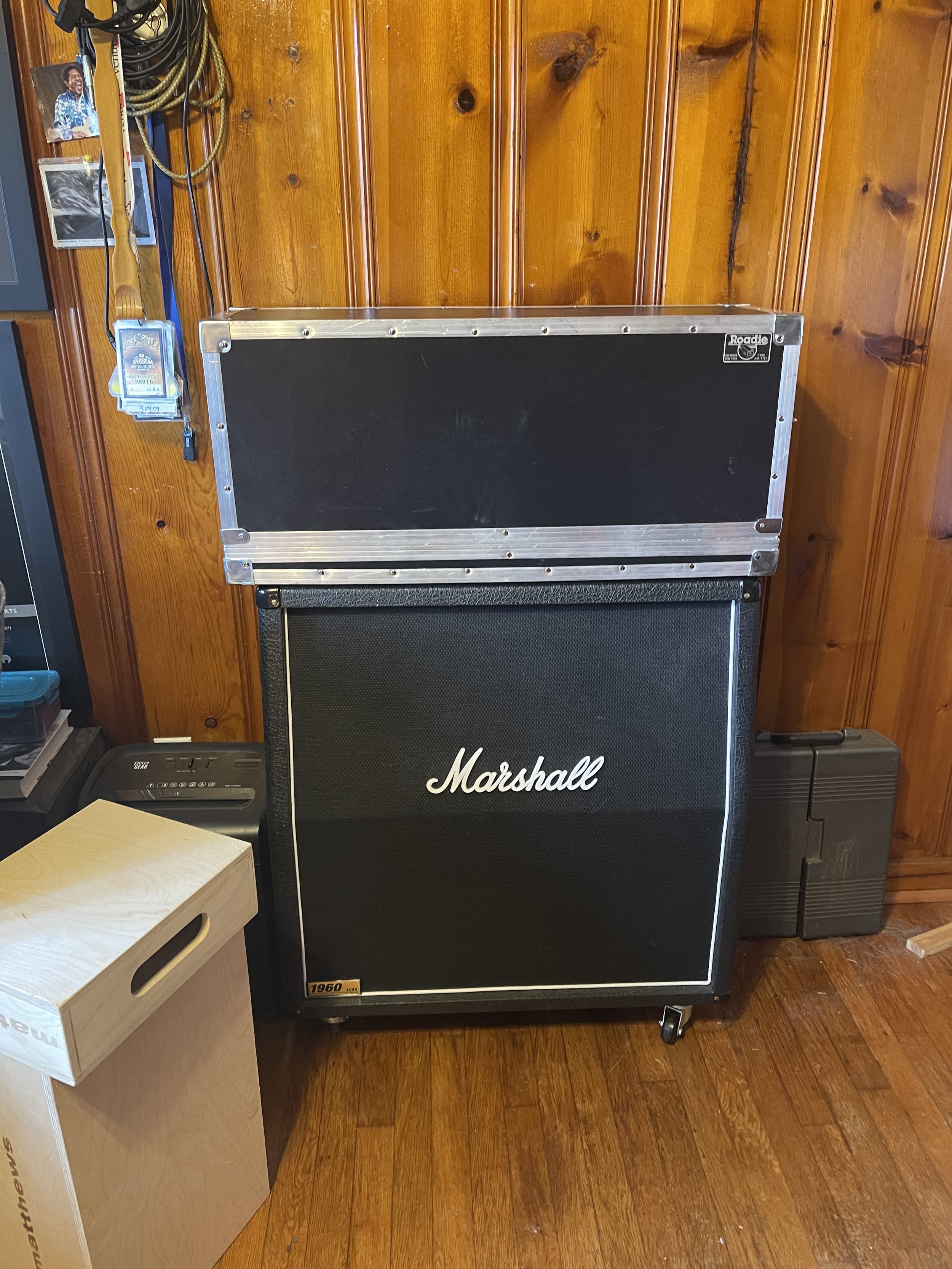
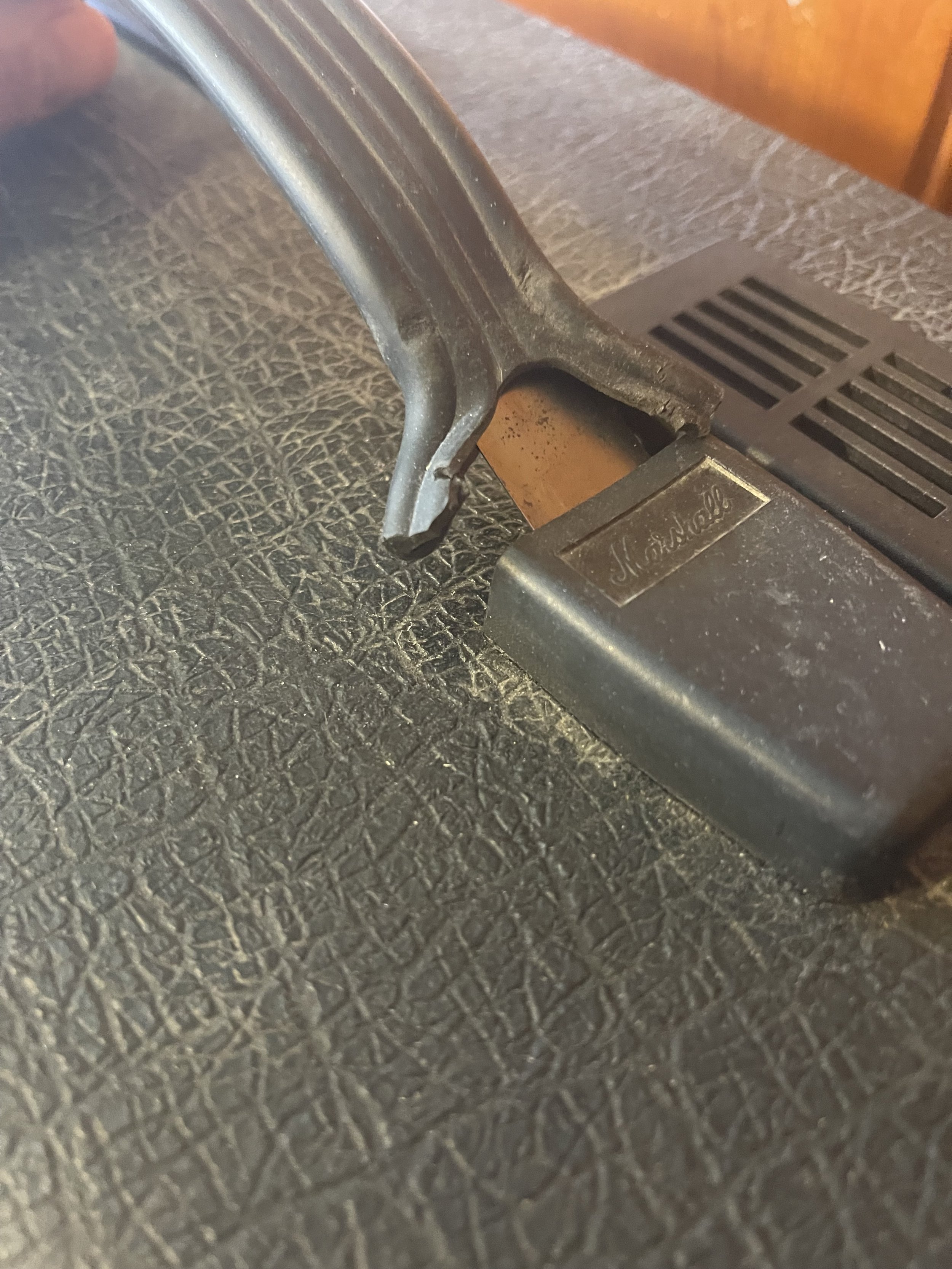
Back to my inspection, and to see what bad news is hidden or obvious, my new to me gear showed heavy use of the handle, no biggie and easily replaceable. If anything, it added some character to the piece, may have been heavily toured from its previous life. The serial number on the rear panel shoed it was a 1997 model, Heck, the amp was over 20 years old, the stories it could tell if it could speak.
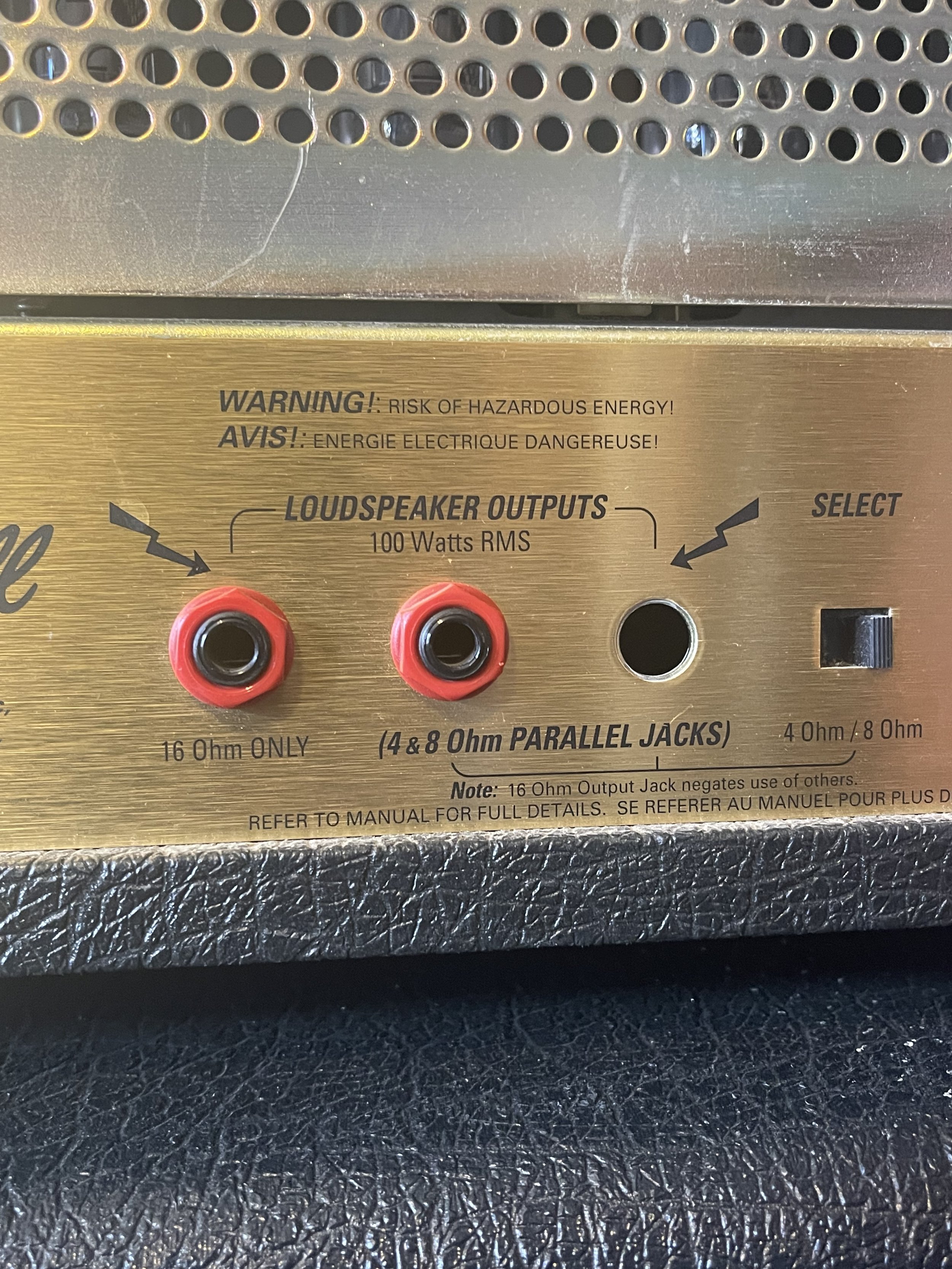
Next, I removed the aluminum mesh grill on the back to insure all the tubes were intact, and they were, the inside of the chassis was dusty, still, it was used gear, easily remedied. The back panel showed it was missing an 8-ohm jack input. Not a deal breaker, and easily fixable. So, all I was able to see visually was the handle needed replaced and an input jack, I finally plugged in my Gibson Les Paul and powered up the amp, strummed a few notes, damn this thing was loud even at 1, scared the crap out of my dog though.so onto the worldwide web we go.
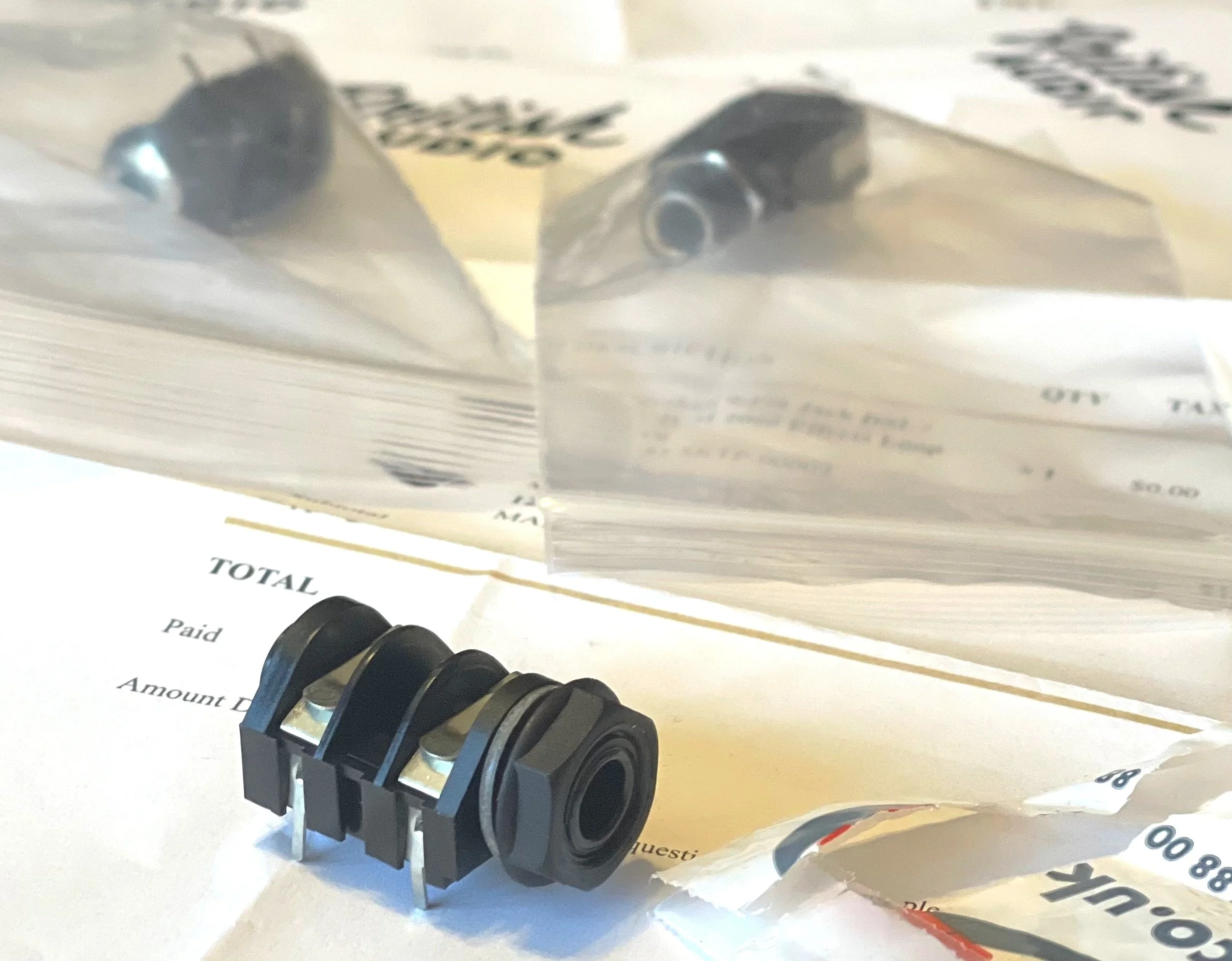
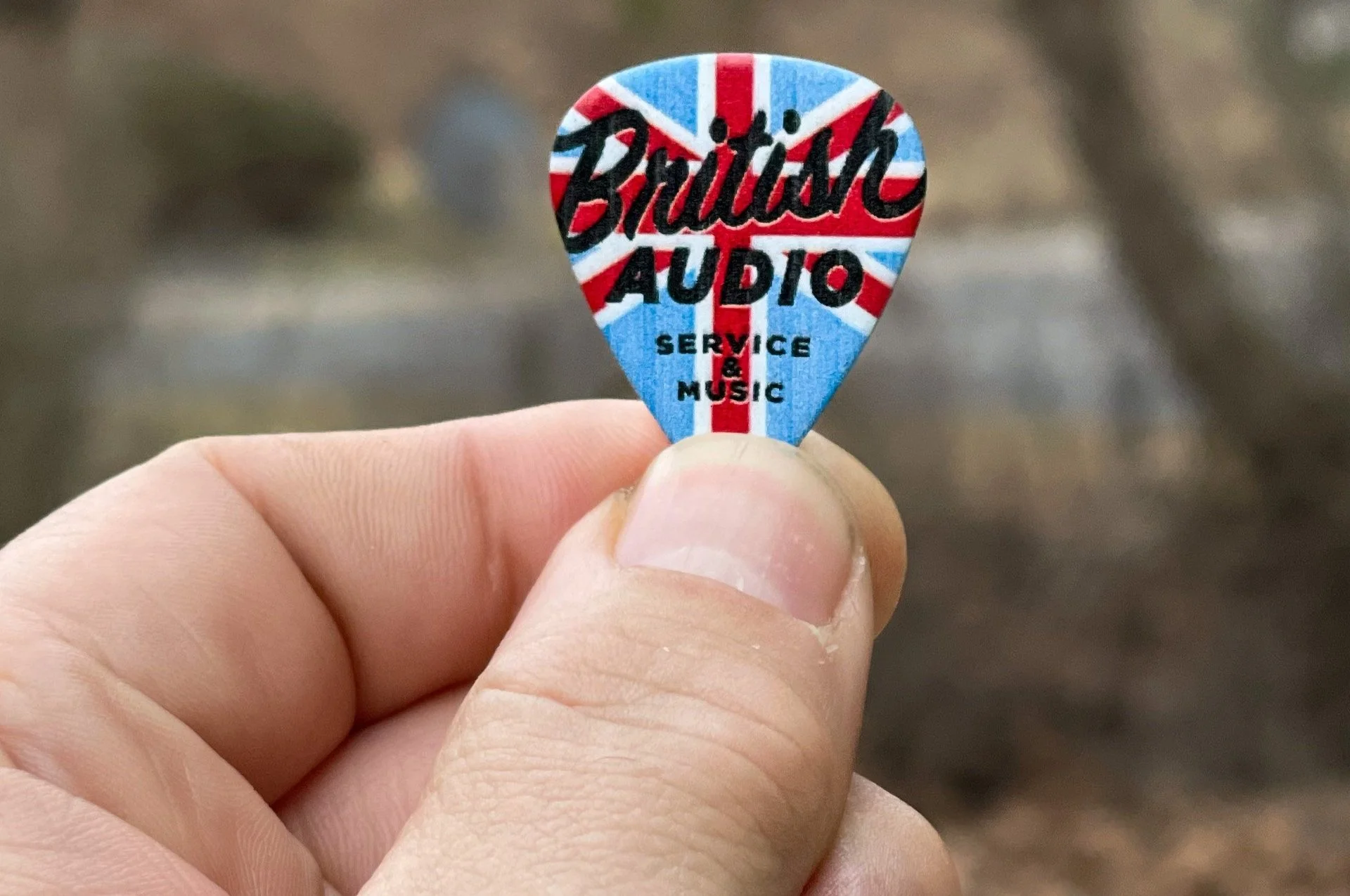
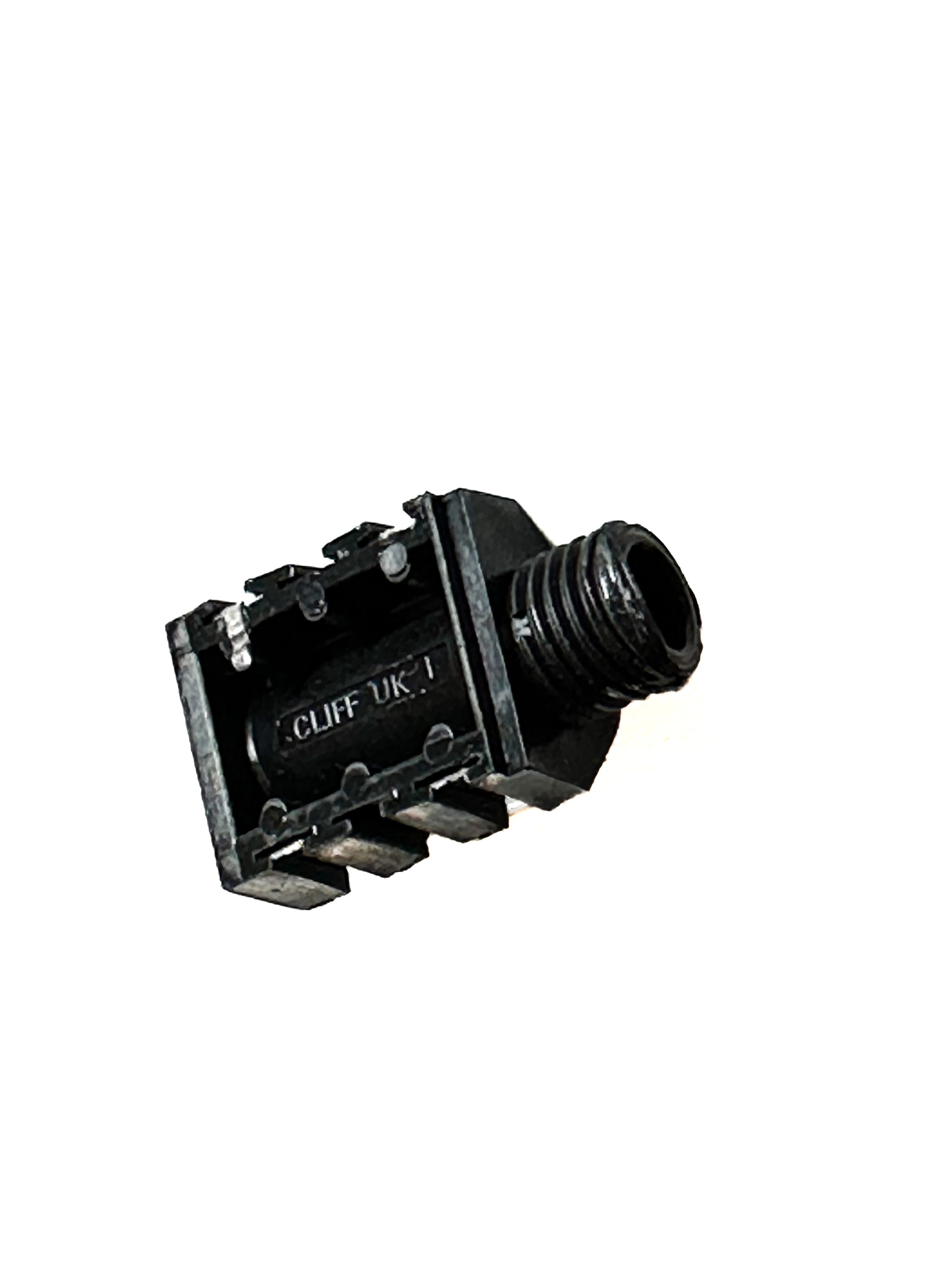
I went through Marshall amplification for the handle, this saved me from getting a generic or fake part. The 8-ohm jack was a different story, I found a shop in Nashville, Tn. called British Audio, it actually took me 3 times to get the right part, the first 2 times I thought I knew what I was doing, the third and last try I actually called the shop, and they got me the right part, third time was a charm. Very friendly staff Nashville Audio was.
The handle I could easily install, the 8-ohm jack was another story. I called around here in my neck of the woods, and Guitar Pus in Beckley, WV gave me the name Keith fain, a retired gentleman that did work on amps.
Keith and I spoke on the phone for over an hour, discussing everything from music to photography. Keith came across as a real people person as well as very knowledgeable in amp repair. He did tell me that the Marshall JCM 2000 did have some Bios issues and the main circuit board was manufactured thin and the replacement boards were thicker and more reliable. I am hoping my current circuit board was changed out prior to myself or Billy Lee Janey owning this amp model.
Honestly my heart sank when Keith told me of the issues this particular amp had, at this point, I was just a phone call away from getting authorization to return it to Guitar Center. It took another search on the internet for see the cost of a replacement board, and I decided to keep my new to me amp. Clearly GC needs to rate their used stuff better, I would have rated this amp as in “Good” condition, would I have kept it if it was rated as such? Probably so, the fix isn’t too bad. The only big fix would be a new circuit board, that would cost me around $200 - $250, The early “2000s” had a problem with bias drift, a new board would breathe new life into it. It really wasn’t so bad after all, and the not so bad to worse news actually had a silver lining, and as promised I added all relevant links below.