Adobe Firefly 5: My New AI Assistant
Recently, I asked a pressing question to two dear friends of mine, Ellen, an accomplished painter, and her husband Chris, an avid photographer. The question had been eating at me for some time: when does a photograph lose its originality and become more of an AI illustration, and when does it truly remain a photograph with AI editing assistance? Both had similar questions as I did, so I went online in search of answers.
Most articles I read appeared to divide the field into AI-generated images and AI-assisted images. Since AI-generated is pretty much self-explanatory, I want to concentrate on AI-assisted images.
The images below of Tyler Connolly of Theory of a Deadman are a clear example I deem “assisted.” Top left is the original from 2011, followed by an edit I did in Photoshop the following year. Dodging and burning, along with some exposure adjustments, gave the image a new dynamic, especially in the mist and fog surrounding the artist. Notice, too, that I eliminated the microphone stand with Photoshop, as it was a distraction. In the bottom images, I removed the mic stand again and used Adobe Firefly to add more punch by eliminating the blue cast and crunching the pixels for a sharper, more defined image. AI assist also let me make the mist and fog more defined. Finally, masking areas in Lightroom and editing them gave the image a more appealing overall look.
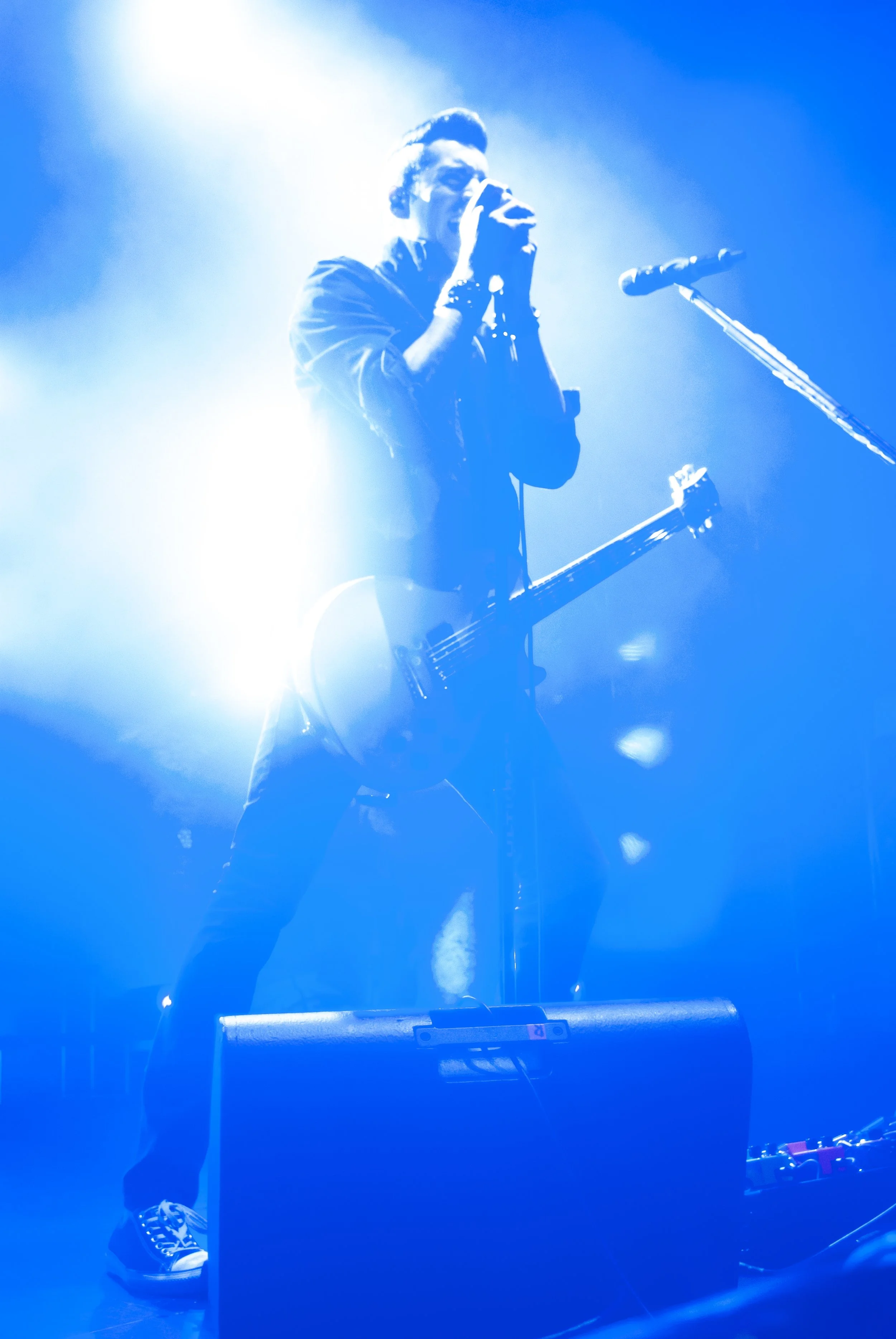
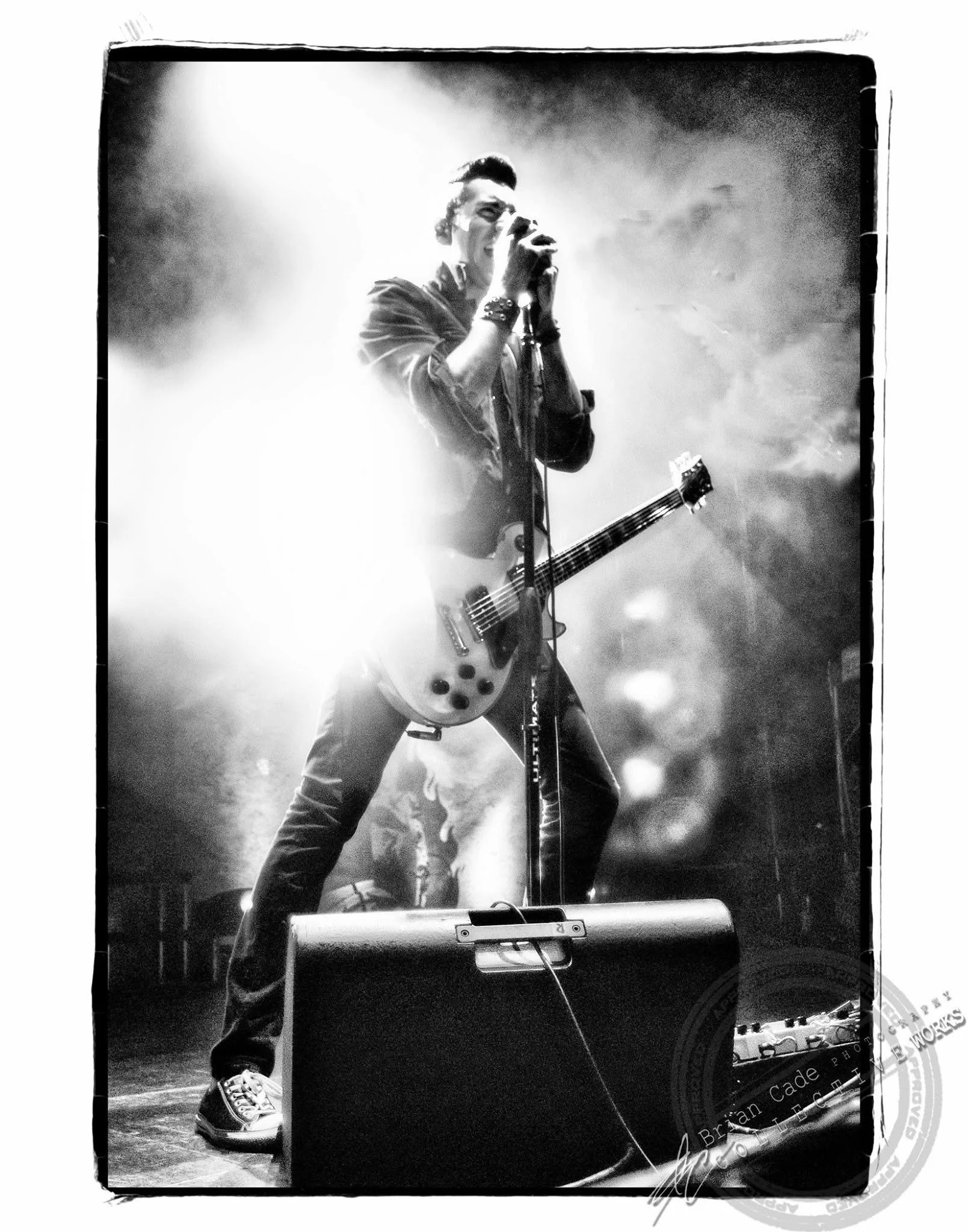
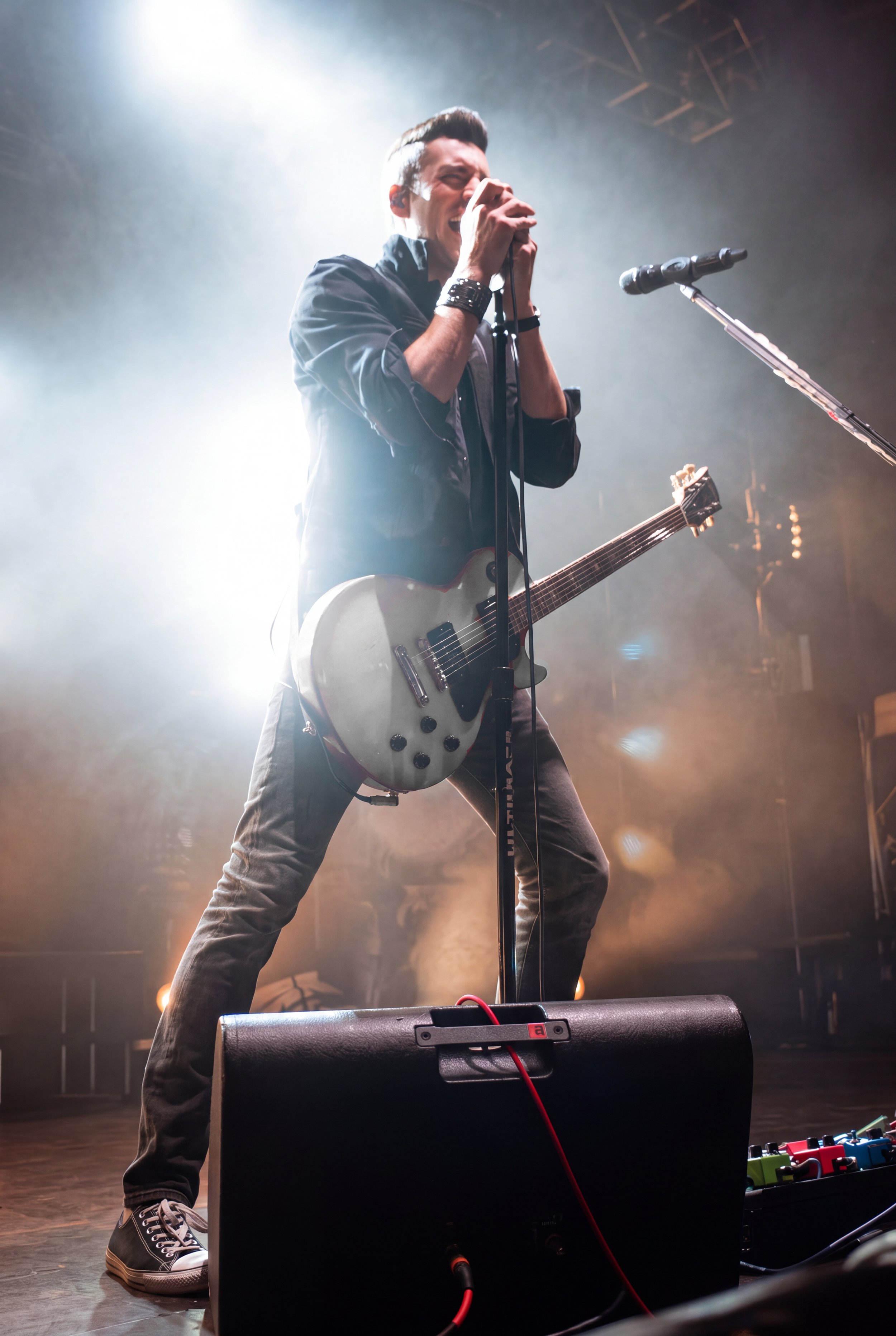
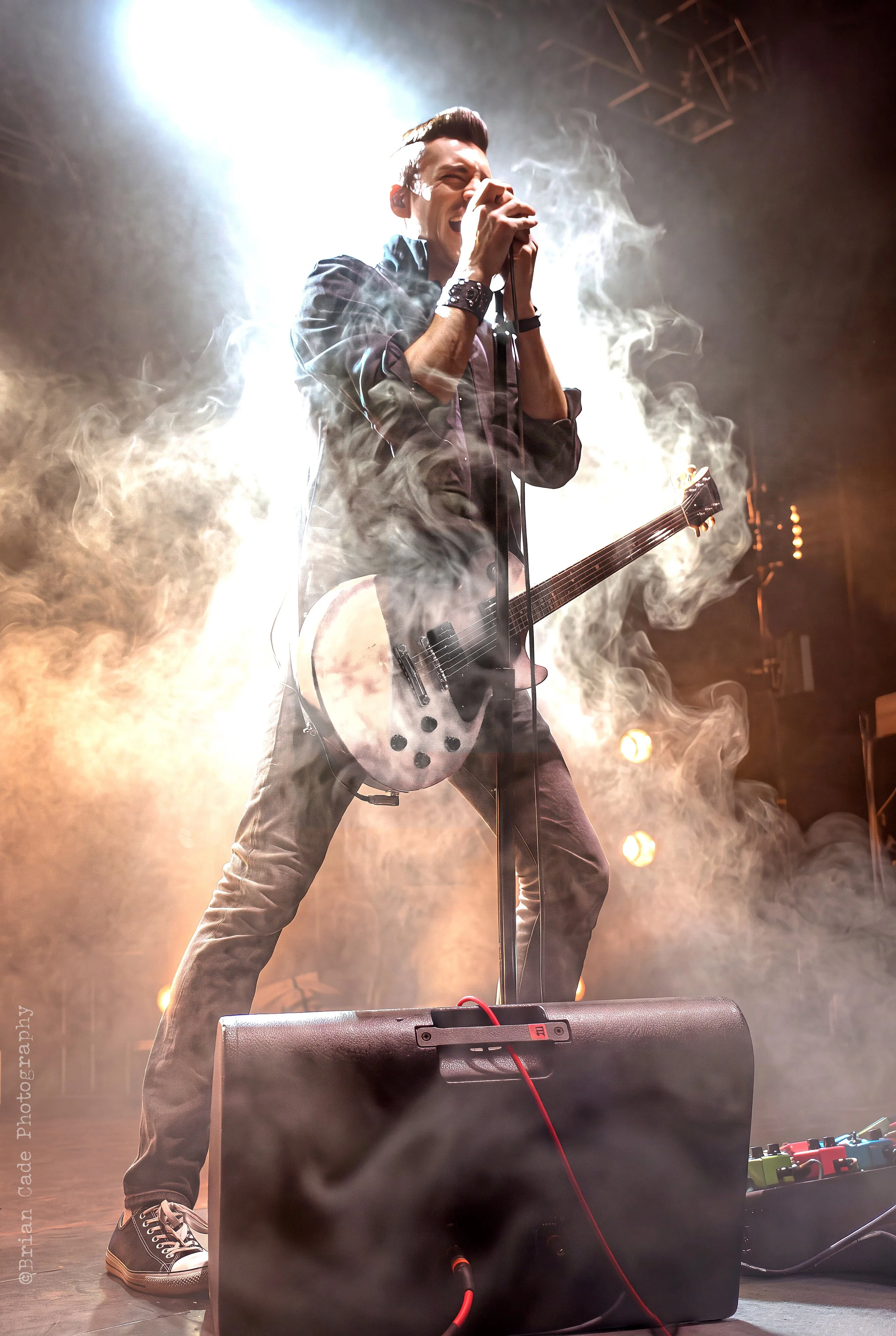
I have a ton of concert images where color lights dominated each band’s set, and I have a lot of image files that may seem unusable—until now. I used Adobe Lightroom CC to remove color cast with the temperature and tint sliders, along with the white balance selector, to adjust the image to a more pleasing rendition of a band or artist.
Using AI-assisted tools such as Topaz AI Denoise, AI Sharpen, Gigapixel, or even Adobe Firefly, I'm taking a lot of the heavy lifting out of the equation; I can now focus on the smaller details with masking in Lightroom to get a better image. I’ve been an artist longer than I have been a photographer; I have used all kinds of tools and push-button apps to achieve certain outcomes in an image. Not all worked, and then again some were over-processed. Below is another AI-assisted image, this time of Mark Morton of Lamb of God. I am really fond of the one on the left, which was processed through Adobe Camera RAW. I thought I’d remove the red color cast from the image to show how AI-assisted tools have a place in my workflow; it gave me a choice.
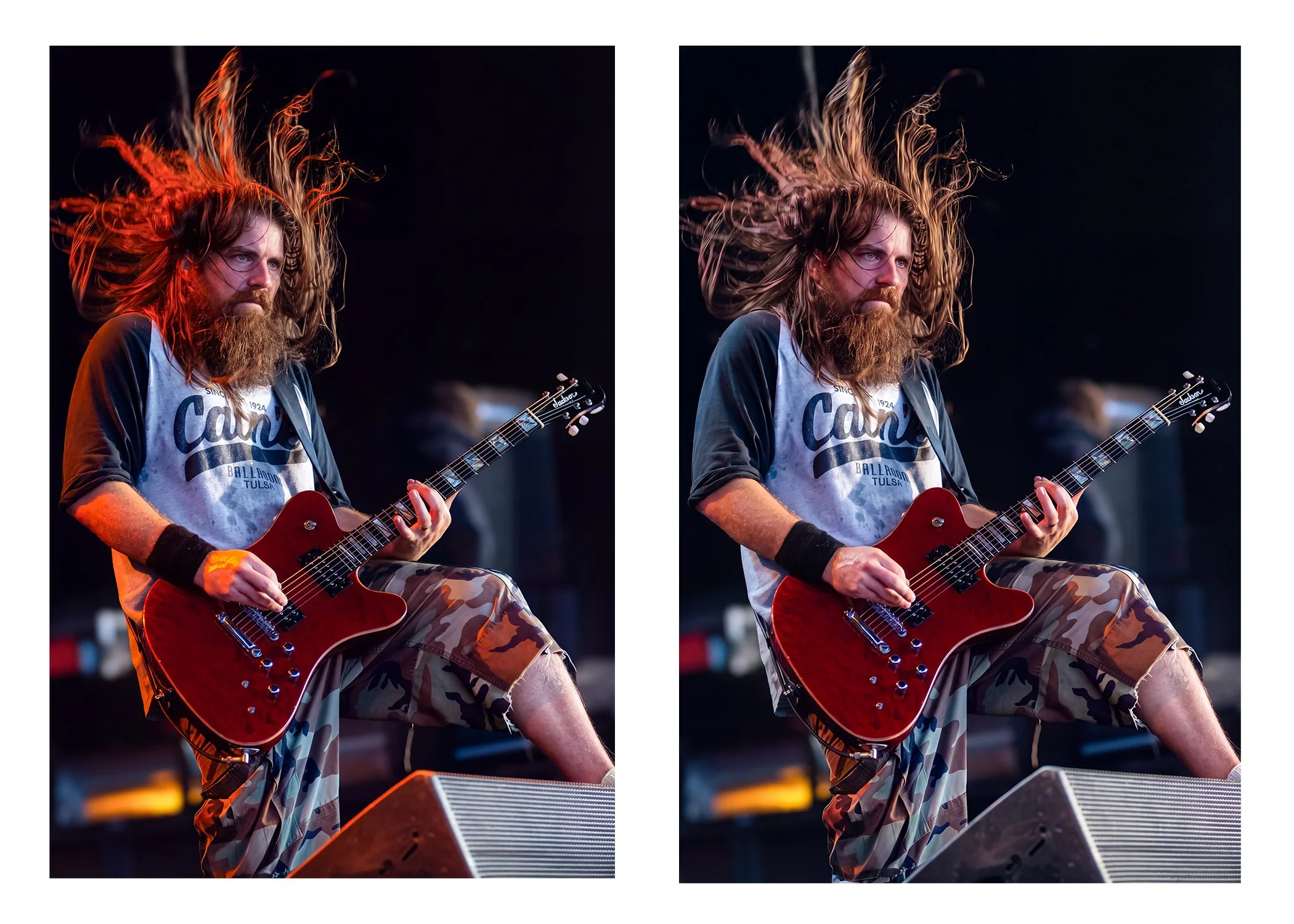
Just remember that when photography debuted in 1839, painters reacted with despair, panic, and hostility. French painter Paul Delaroche declared “from today painting is dead,” while English romantic painter J.M.W. Turner called it the end of art. Same as when digital photography made its debut, purists of the film and darkroom age felt the same as the painters did when photography came around.
As our creative methods evolve, many digital photographers are worried about the rise of AI. This situation is similar to what traditional painters faced in 1839: The solution is to adapt and grow, or risk being left behind. The reality is that AI, even as a tool to help photographers, is here to stay.